What This Blog Is (and Isn't)
Clear boundaries: guidance, not guarantees
We work in practical nutrition—the everyday choices that build steady habits. This blog shares approaches grounded in real life: realistic routines, gentle adjustment, and the understanding that change happens together.
What we are: advisors and partners. We offer structured guidance, listen to what's actually happening in your daily life, and adapt our thinking as you discover what works.
What we are not: we are not medical professionals. We don't diagnose, treat, or promise recovery from illness. We don't prescribe for medical conditions. Our role is narrower and clearer than that.
Nutrition is one part of a much larger picture. If you have medical concerns, a healthcare provider is the right first conversation. We sit alongside that care, not instead of it.
Every person brings something essential to this work: you bring your lived experience, your constraints, your preferences, your reality. We bring structure, pattern recognition, and a framework for thinking differently about food and routine. Both matter.
Shared Roles: Who Brings What
A clear split of responsibility and collaboration
You bring:
Your calendar. Your kitchen. Your taste preferences and genuine dislikes. Your budget. Your social life and the meals you can't skip. Your energy on a Wednesday at 6pm. Your honest obstacles. Your permission to try something new—or to admit it didn't work.
We bring:
Pattern recognition from years of practice. A framework for thinking about what works and what doesn't. Structured options—not rigid rules, but thoughtful starting points. Questions to help you notice what's already working. Adaptation when something isn't landing. Continuity and accountability to the process.
Together:
We design a rhythm that fits your actual life, not a fantasy version of it. We catch patterns you might miss. We adjust early rather than letting something break down. We acknowledge that some weeks are harder than others, and that's normal. We build something steady enough to hold through change.
Midweek Slump: When Choices Get Hard
Wednesday evening, tired, and something breaks
There's a predictable moment in most weeks: the point where energy drops, plans change, or willpower feels thin. It's usually around midweek, and it's completely normal.
The key isn't fighting that moment. It's planning for it.
If you know Wednesday is hard, we build something that works on Wednesday—not on Monday when you're fresh. We anticipate the exhaustion, the social plans, the unexpected meeting. We create defaults that don't require decision-making when you're tired.
A quiet lunch at your desk. The ingredients for something simple already in the fridge. A standing plan to order in rather than improvise when energy is low. These aren't failures. They're design features.
Steady habits aren't built on perfect days. They're built on realistic ones.
Kitchen Setup: Defaults That Save Energy
Small structures that make the easy choice the right choice
Your environment shapes your choices more than willpower does. A well-structured kitchen isn't about obsession—it's about making good choices the default.
Key principles:
Visibility. Keep what you want to eat visible and accessible. If something's hidden at the back of a cupboard, you won't reach for it.
Portion control through preparation. Pre-portion items into containers rather than eating from the bag. One small step up front saves dozens of small decisions later.
Ingredient redundancy. Keep multiple versions of key items—different grains, vegetables that store well, proteins that fit your routine. When one option is gone, another's still available.
One decision per meal. If you've already decided breakfast is porridge, you're not re-deciding every morning. The structure holds.
This isn't restriction. It's the opposite: it's removing unnecessary friction so you can actually choose what you want.
Everyday UK Scenes: How This Works in Real Life
Five moments where these principles come together
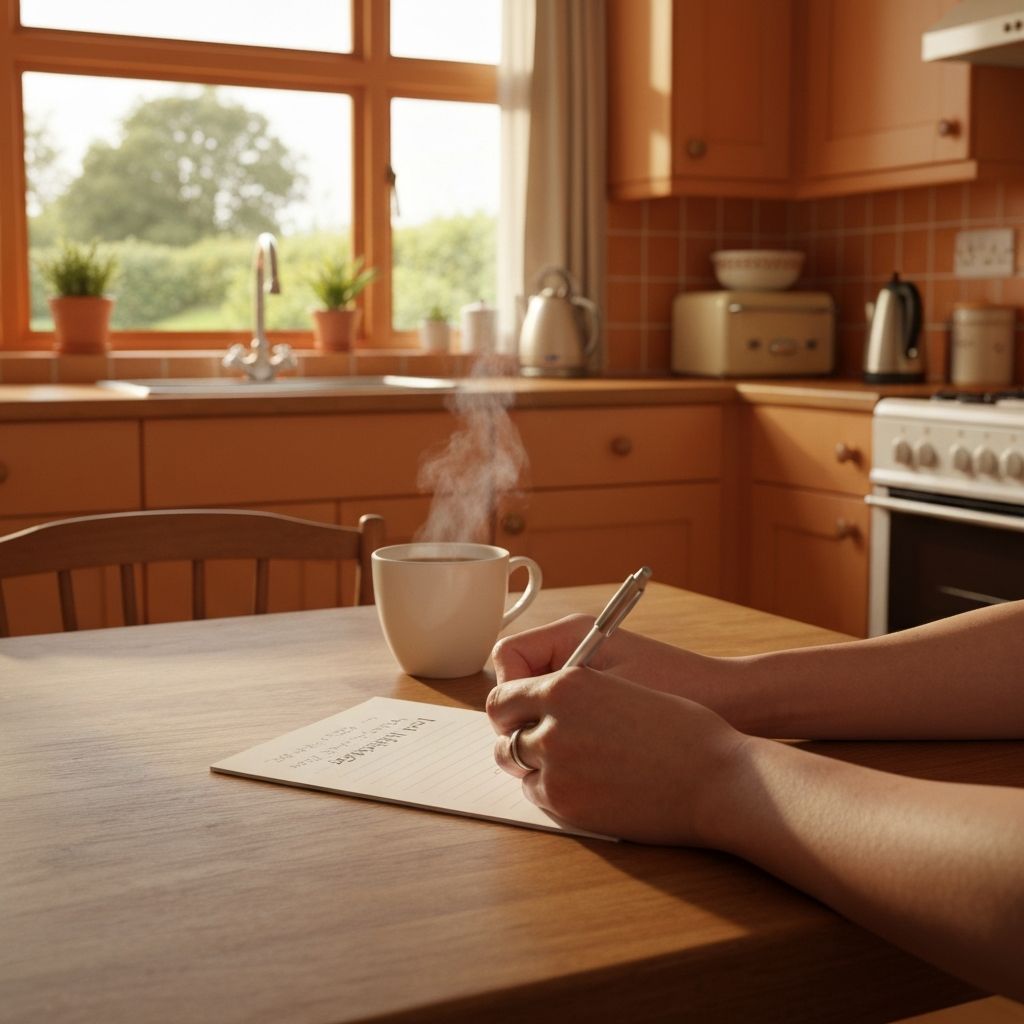
Sunday evening: Planning the week
Not a rigid meal plan. A sketch: what's realistic this week? Which nights are full? What's worth cooking? This 20 minutes up front removes 50 small decisions later.

Supermarket: Sticking to the rough sketch
The shopping list keeps you in the lane. Without it, you're deciding everything in the moment, tired, hungry, overwhelmed. With it, you're just executing.

Tuesday lunch: The default working
You've got something easy to hand. No ordering takeaway because you didn't think ahead. Just a quiet, simple meal at your desk or with a colleague.

Thursday: A social meal, planned
You're meeting a friend. It's not a deviation—you've built in flexibility for meals that matter socially. The routine is steady enough to accommodate change.

Friday evening: Simple dinner at home
The week's winding down. Something straightforward, something that doesn't require energy. This is where the structure pays off—you're not exhausted, you're just ready to relax.
Supermarket Rhythm: Buying for Real Life
A sustainable approach to shopping
The supermarket is where planning meets reality. A few principles make it easier:
Shop the perimeter first. Fresh food lives on the outside. Get what you need there, then visit the middle aisles for specific items. You're less likely to wander and pick things up out of habit.
The same time, same day. Familiarity with your route and the rhythm reduces decision fatigue. You know where things are. You know roughly how long it takes.
Batch buying for the week. Buy enough to see you through, but not so much that things go off before you use them. It's a balance learned over a few weeks of paying attention.
Eat what you buy. This seems obvious, but it's worth saying: if you're regularly throwing food away, either you're buying too much, or you're buying things you don't actually like. Pay attention to what ends up in the bin.
One staple rotation. Pick three or four reliable items you can build meals around—different grains, proteins, vegetables. Rotate them. They become the spine of your routine.
The Process, in Five Lines
How we structure the work together
What's actually happening now? Where does energy go? What's realistic this season?
Track the patterns without judgment. When do you eat? How do you feel? What patterns emerge?
Make small changes. Test what shifts. Build what works. Abandon what doesn't.
Regular check-ins. Accountability. Conversation. You're not doing this alone.
Step back. What's different? What held? What needs adjustment for this new season?
About Us + Reflection
Criterionau is a nutrition-focused advisory project in the United Kingdom. We work in partnership: through dialogue, adaptation, and steady support. Our role is to help you build real habits that fit your actual life.
We don't promise transformation or quick results. We don't offer medical treatment. We offer something quieter: clarity about how food and routine actually work, partnership in the change process, and the space to adjust as you learn what works.
Nutrition advice that matters is built on two-way responsibility. You bring honesty about your reality. We bring structure and pattern recognition. Together, we design something that lasts.
This is slow work. Steady work. The kind that holds through seasons and changes, because it was built for real life from the start.
Five questions for reflection
- What does a realistic week actually look like for you right now? Not your aspirational week—your actual week.
- Which meals or moments in your week are least stable? What usually derails them?
- What's one small change you could make to your environment that would make the easier choice the better choice?
- Who or what usually supports you when you're trying something new? How could you use that more intentionally?
- What would "success" actually feel like to you in six months? Not a number—a feeling, a rhythm, a change you'd notice in your daily life.
Contact & Information Request
We'd like to hear from you
Company Contact Details
Criterionau
35 Queen Street
Cardiff CF10 2AG
United Kingdom
Phone: +44 29 7592 4186
Email: [email protected]
Social Meals: Calm Choices in Company
Eating with other people, without losing your rhythm
One of the biggest wobbles in routine comes from meals with others. A meal out, a work lunch, a family dinner—these are where habits pause.
But they shouldn't be a reason to abandon structure. Instead, they're a different kind of structure.
Plan social meals in advance. Know which week has the work lunch, which Friday has plans. Build them in rather than letting them surprise you.
Enjoy them fully. When you eat socially, eat socially. Don't track, don't overthink. The meal exists in a different context. That's fine.
Return to routine after. The meal ends. The routine continues. One meal doesn't undo a week of structure—but a week of using meals as an excuse does.
Choose restaurants or venues that feel comfortable. You don't need to prove anything by ordering food you don't actually want. Pick places where you can order what works for you and feel relaxed about it.
The goal is steady habits that include actual life: rest days, social time, meals that matter. A routine that doesn't bend breaks. One that bends and holds is sustainable.